The Problem With Science Class in Rural Ethiopia
In rural Ethiopia, primary school teachers are resourceful. They have to be.
When the national curriculum calls for discovery, investigation, and hands-on learning, rural schools feel the gap. Teachers adapt. They find ways. But adapting has its limits. A classroom without tools (or with too few tools for so many children) can only take a curious child so far.
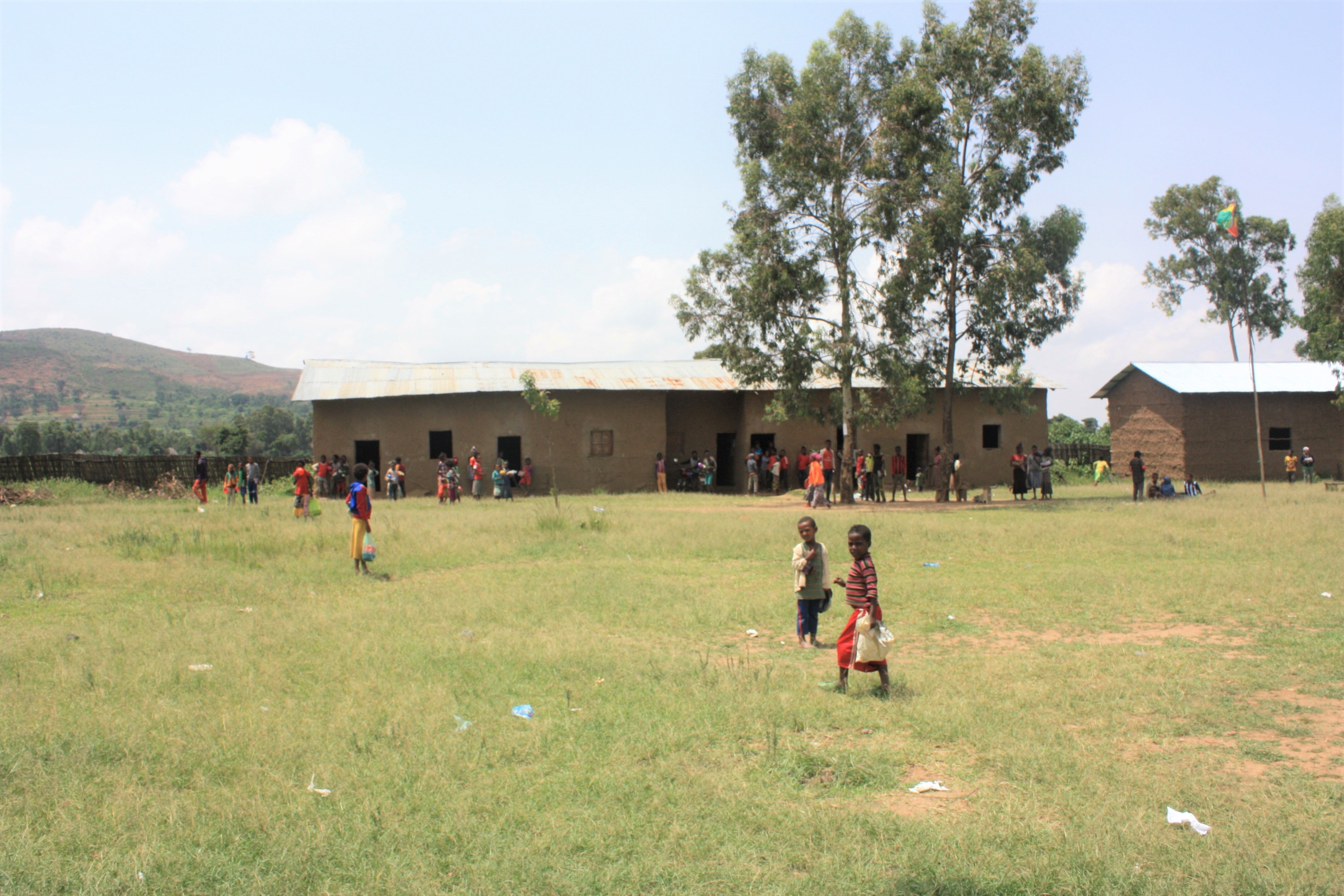
At Shamo Boyo Primary School in Shashogo Woreda, science class meant textbooks and a handful of basic locally sourced materials. The classrooms were small, crowded, and dark. Teachers had ideas but no equipment, no training in lab-based instruction, and no dedicated space for experiments. The gap between what was possible and what was available felt enormous.
This is not unique to Shamo Boyo. It is the reality of Ethiopia primary school education across many rural communities. Resources are scarce. Infrastructure lags. And the children who are most eager to learn are often the least equipped to do so.
In 2026, that changed at Shamo Boyo.
A Historic First: The Science Laboratory
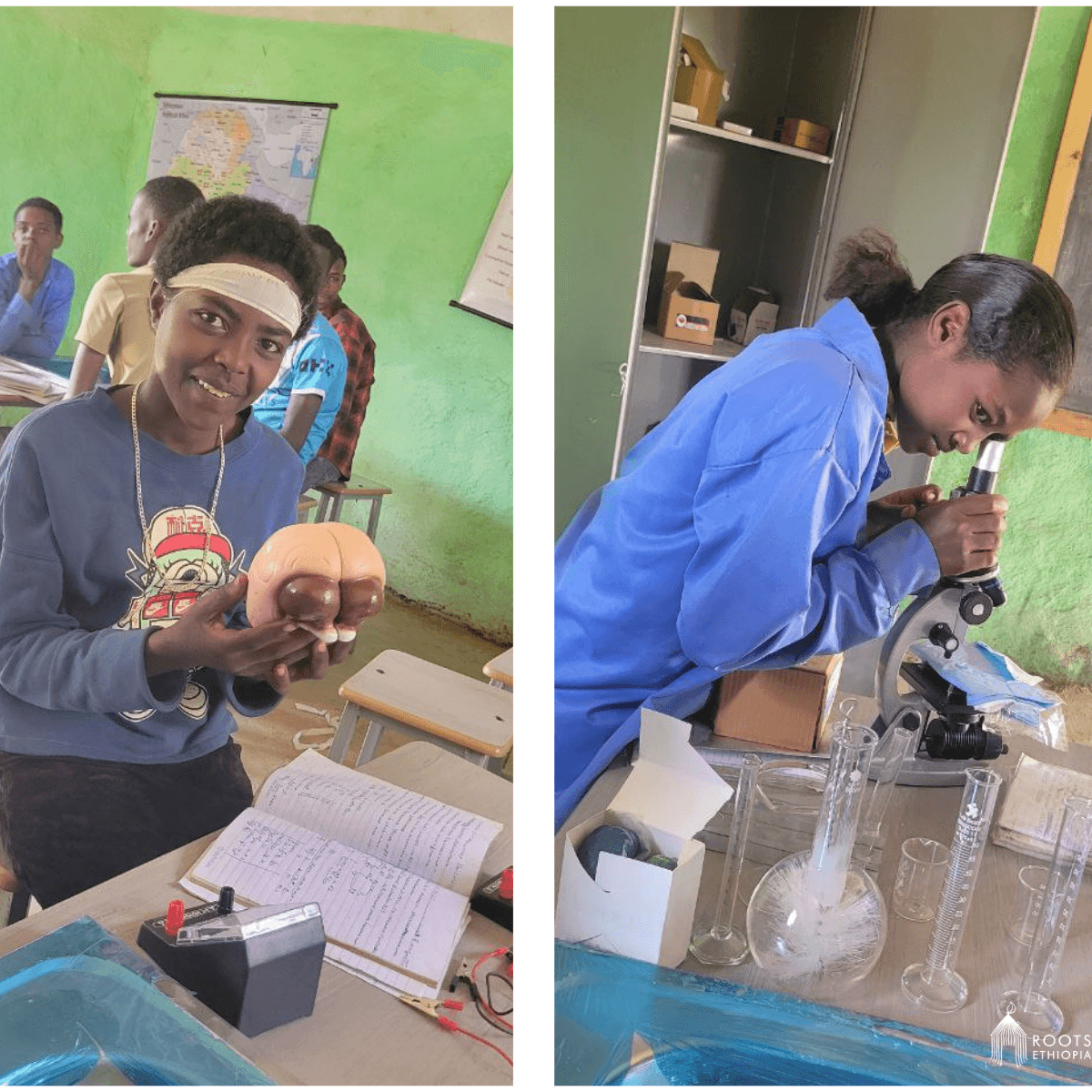
Shamo Boyo Primary School now has the first fully equipped science laboratory at the primary school level in all of Shashogo Woreda. This is the first at this school — and the first in the entire district.
Students are running experiments. They’re using microscopes. They’re discovering that science is something you do, and not something you read about. More than 50 students use the lab every single day.
And the reach extends beyond this school: students from Shamo Ajecho Comprehensive High School, grades 9 through 12, also come to use it. The lab has become a resource for an entire community of learners.
“There is so much we can do that we could not do before!”
— Berekech, grade 7, Shamo Boyo School
Berekech’s words capture something important. She didn’t say “we have more.” She said we can do more. Her words are so powerful, because it's the move from passive students to active participants in their own learning.
Teacher Training: Because Resources Without Training Only Go So Far
A science lab without trained teachers is too often feels like room without the spark of active learning. That’s why teacher training is built into every step of a school improvement project, whether it's phase 1 or phase 3! Let's be honest, projects like this take significant financial commitment. They take time. And with each step, the quality of education for every child improves.
Science teachers at Shamo Boyo received hands-on training in lab-based instruction alongside the new equipment. The goal was never to deliver tools and depart. It was to build capacity so the lab stays active, alive, and genuinely useful for years to come.
This is a core principle of how Roots Ethiopia approaches school improvement: materials and training together, always. One without the other doesn’t stick.
800 Books and the Curriculum Gap
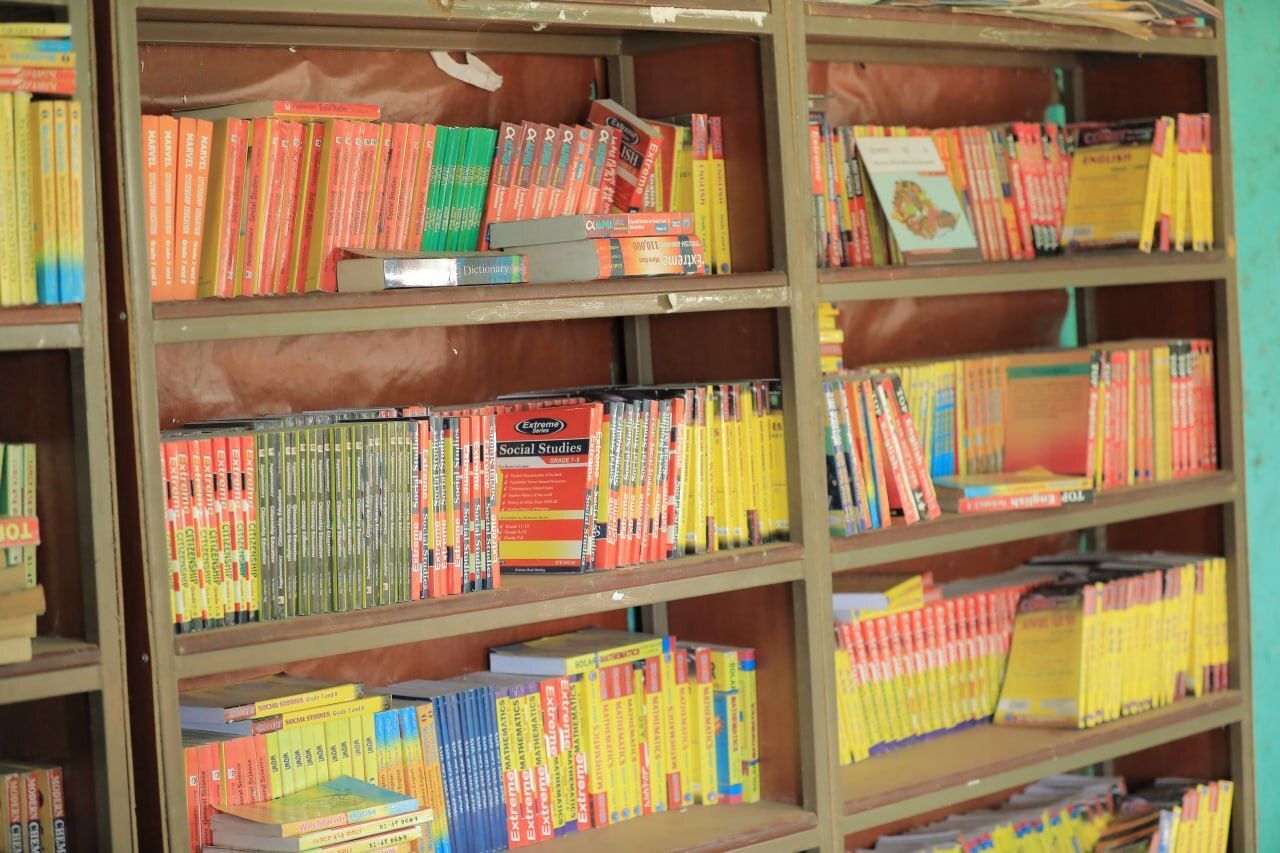
The science lab was not the only transformation. All 943 primary students — grades 1 through 8 — now have access to 800 updated curriculum reference books.
These books matter. The national curriculum in Ethiopia has been updated and revised, but many rural schools don't have enough books for their students (who rarely have their own textbooks). The struggle for teachers and students working from outdated materials has been significant. It is a gap that is difficult to fill because of the cost involved.
Because of the Phase 2 project at Shamo Boyo, updated books were prioritized. When local officials heard the news, they came to see the library for themselves. Word spread across the district.
For a rural school to have current curriculum materials is not a small thing. It is the foundation on which everything else is built.
Renovated Classrooms, New Furniture, Better Learning
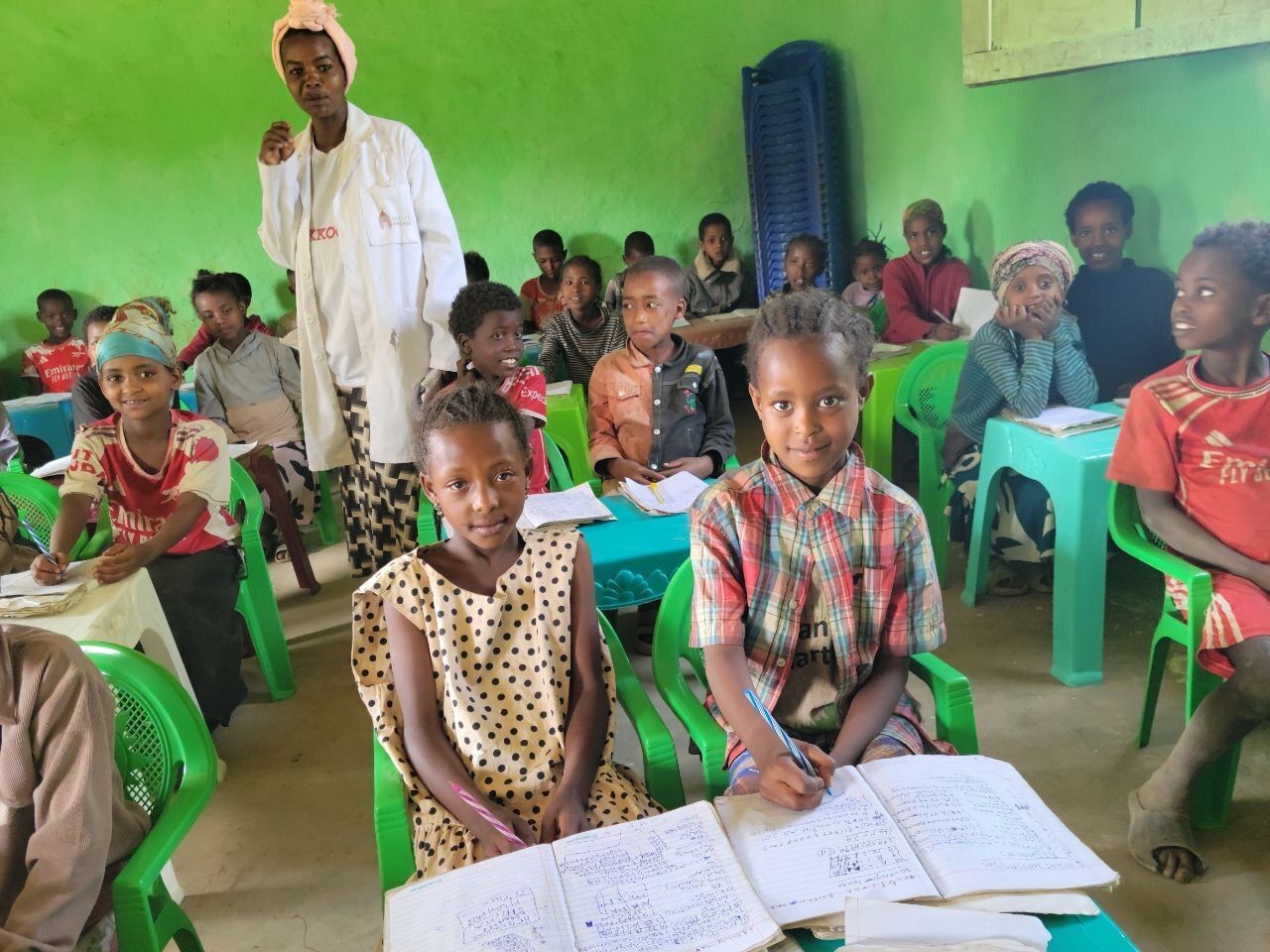
Three classrooms were fully renovated and refurnished with new desks, blackboards, charts, maps, and teaching models. Teachers received professional development alongside every new resource — the same principle applied here as in the lab: tools and training together.
943 students. 455 boys, 488 girls. Better classrooms, better tools, and better learning all the way through grade 8.
The Littlest Learners: Pre-Primary Transformed
In rural Ethiopia, pre-primary classrooms have often meant dirt floors, children sitting on the ground, and few or no learning materials. The early years are when the brain develops fastest. For children in under-resourced settings, that window has historically been missed.
Not anymore at Shamo Boyo.
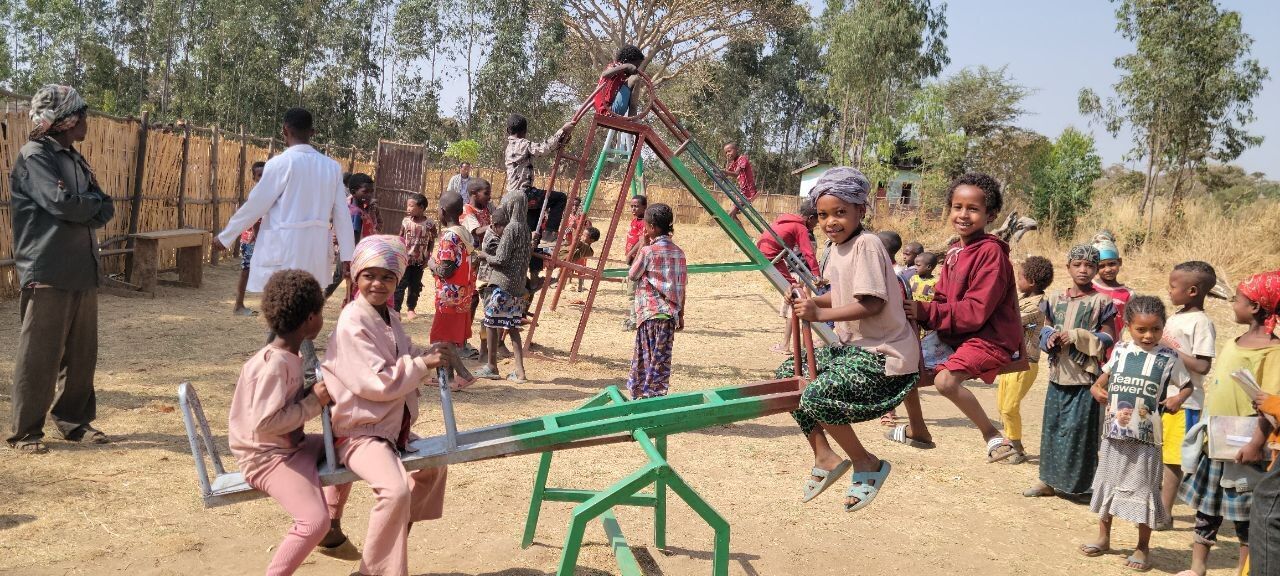
Two learning rooms were fully renovated. Fifty chairs and twenty-five tables were brought in so every child has a place to sit. Outdoor play structures were installed for physical development and social confidence. Five Montessori learning sets added hands-on tools designed specifically for this precious stage of development.
The pre-primary section of campus is now fenced, ensuring safety and supervision. Classrooms are bright, organized, and welcoming.
“We send our children to their very first classroom now with a better feeling, and they are smiling when they come home”
— Mrs. Desta, parent of 4 school children
Child-Centered Teaching: Training the Teachers Who Shape the Youngest Minds
The teachers who work with these children are now trained in child-centered teaching. Because good materials do even more when paired with a teacher trained to bring them to life.
For the littlest learners, this combination — the right space, the right tools, the right approach — is everything. It's how play becomes learning and learning becomes a lifelong habit.
195 children — 95 boys, 100 girls — are now in an environment that says: you belong here, and your learning matters. These are tomorrow's primary school students. They needed this strong start.
What Was Made Possible: By the Numbers
1,138 total students reached, pre-primary through grade 8
588 of those students are girls
50+ students using the science lab every day
1 first science lab at the primary level in Shashogo Woreda
800 updated curriculum reference books
195 pre-primary children learning in transformed classrooms
2 new preschool classrooms, fully renovated and furnished
50 new desks for primary students
3 classrooms renovated and refurnished for grades 1–8
Why This Matters for Ethiopia Primary School Education
School improvement in rural Ethiopia is about more than buildings or books. It is about belief that children in Shashogo Woreda deserve the same quality of learning environment as children anywhere else.
When Berekech looked through a microscope for the first time and said “There is so much we can do that we could not do before,” she was describing so much more than the science microscope. She was describing what happens when a community decides that its children are worth investing in fully, from the preschool playground all the way to the Grade 8 exam.
That’s what Roots Ethiopia’s school improvement work is about. Your gifts of support create a layered, sustained commitment to the full arc of a child’s primay education with materials, training, and local leadership at every step.
Shamo Boyo is one of 31+ schools Roots Ethiopia has supported. Every one of them has a story like this.


